
- CALL : (+91) 95443 09166
- Support : (+91) 95443 09166
- IP Health
- Jun 28
- 6 mins read
Residential Proxies vs Datacenter Proxies: Which Are Used Most in Fraud?
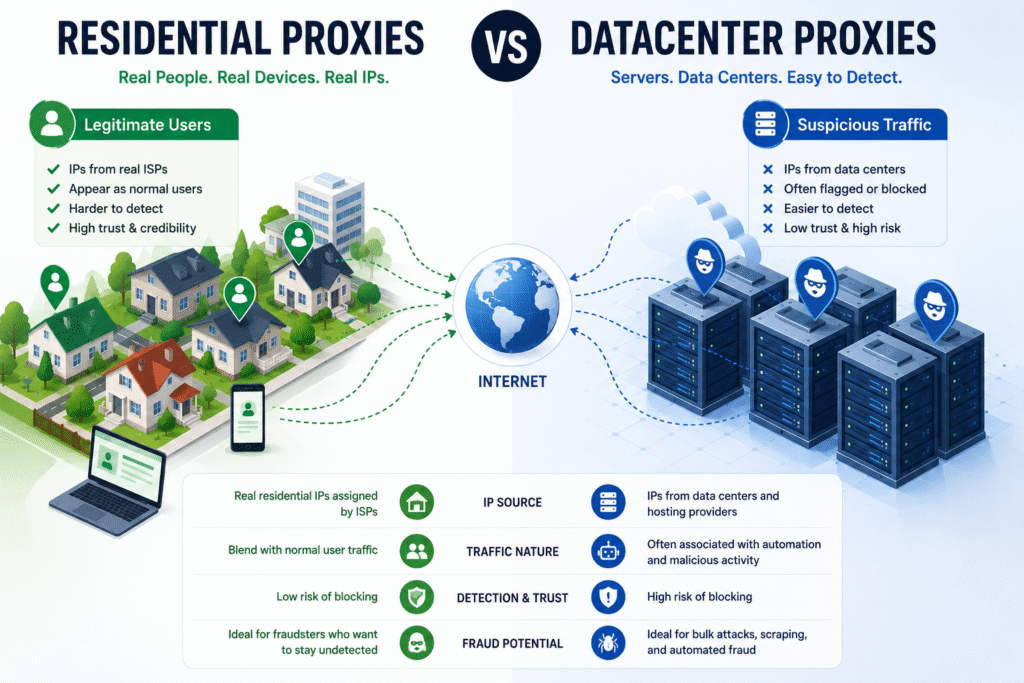
Online fraud has evolved significantly over the last few years. Fraudsters no longer rely on a single IP address or a basic VPN to hide their identity. Today, sophisticated attackers use massive proxy networks to bypass security systems, automate abuse, create fake accounts, scrape websites, and commit payment fraud at scale.
Two of the most commonly used tools in this ecosystem are residential proxies and datacenter proxies.
If you work in fraud prevention, cybersecurity, fintech, ecommerce, or SaaS security, understanding the difference between these two proxy types is essential. More importantly, knowing how fraudsters use them can help you build better defenses.
In this article, we’ll break down:
- What residential and datacenter proxies are
- How they differ
- Why fraudsters use them
- Which one is harder to detect
- How businesses can identify proxy-based fraud using IP reputation intelligence
What Is a Proxy Server?
A proxy server acts as an intermediary between a user and the internet.
Instead of connecting directly to a website or API, the user routes traffic through another IP address. This helps hide the original IP address and location.
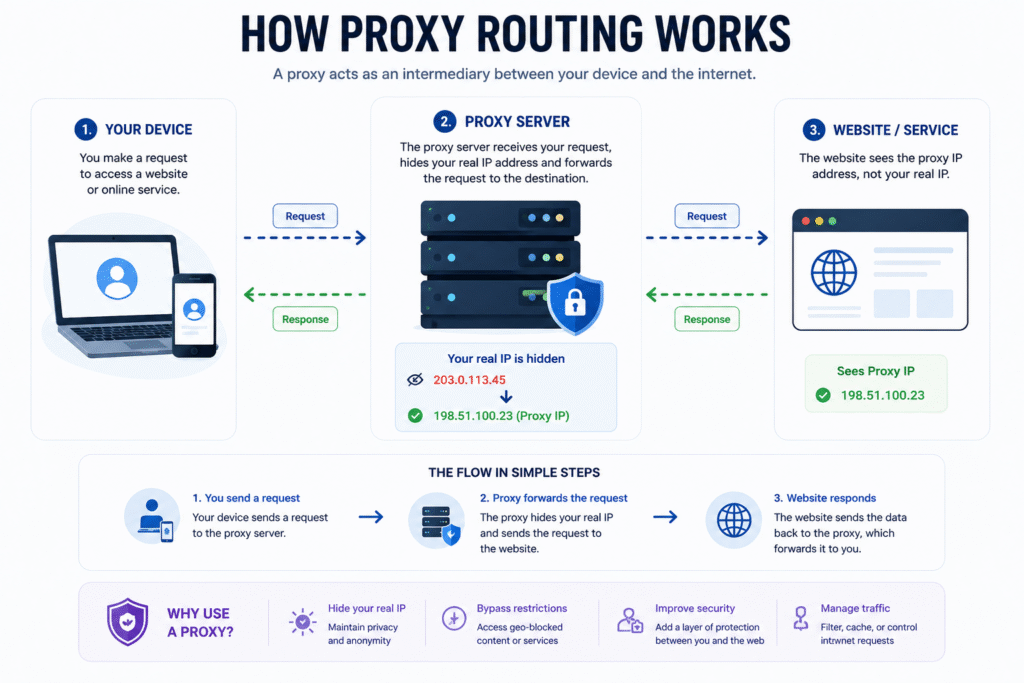
Proxies are widely used for legitimate purposes such as:
- Privacy protection
- Ad verification
- Market research
- Web scraping
- Testing geo-restricted content
However, they are also heavily abused in fraud operations.
Fraudsters use proxies to:
- Mask their identity
- Rotate IP addresses
- Avoid bans
- Circumvent rate limits
- Create fake accounts
- Bypass fraud detection systems
The two main categories are residential proxies and datacenter proxies.
What Are Residential Proxies?
Residential proxies use IP addresses assigned by Internet Service Providers (ISPs) to real households and devices.
These IP addresses belong to actual consumers using broadband or mobile internet connections.
When traffic comes through a residential proxy, it appears to websites as if it originated from a normal home user.
For example:
- A fraudster in another country may appear as a user browsing from New York
- A bot may appear as a normal mobile customer on a telecom network
- Automated traffic may blend in with legitimate users
Residential proxy networks are often built using:
- Peer-to-peer applications
- Browser extensions
- Mobile SDKs
- Compromised devices
- Paid proxy-sharing networks
Because the traffic looks legitimate, residential proxies are extremely effective for evading detection.
What Are Datacenter Proxies?
Datacenter proxies use IP addresses hosted in cloud environments or data centers instead of residential ISP networks.
These IPs usually originate from:
- AWS
- Google Cloud
- Azure
- OVH
- DigitalOcean
- Hetzner
- Other hosting providers
Datacenter proxies are faster, cheaper, and easier to scale compared to residential proxies.
They are commonly used for:
- Web scraping
- Automation
- SEO monitoring
- Bulk account creation
- Credential stuffing attacks
Unlike residential IPs, datacenter IPs are not tied to physical households or mobile subscribers.
This makes them easier to identify.
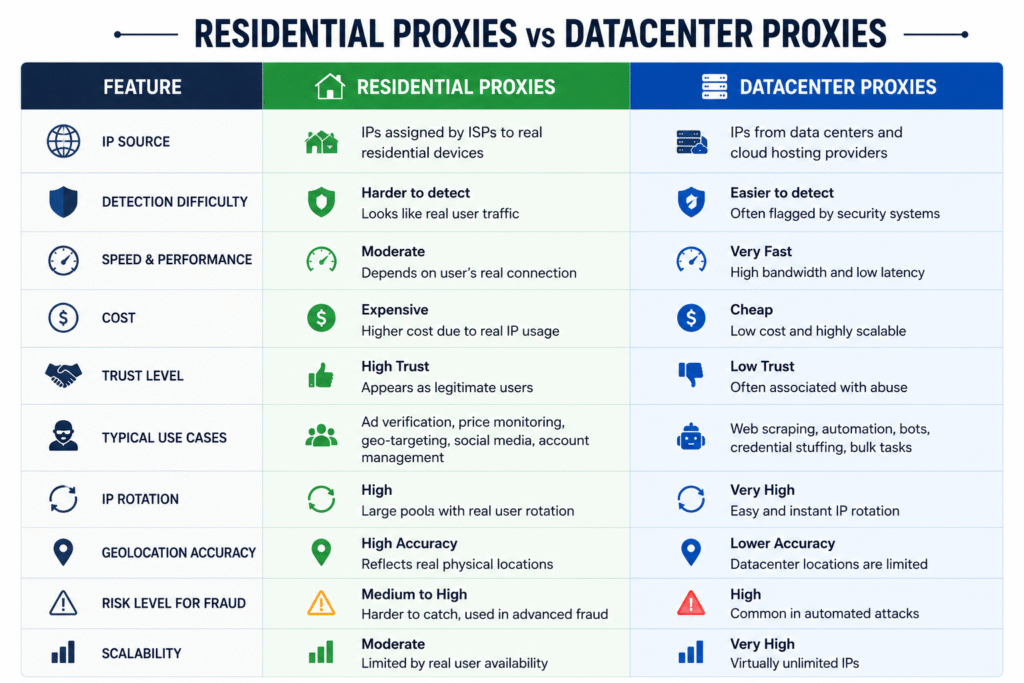
Residential Proxies vs Datacenter Proxies
Here’s a simple comparison:
Why Fraudsters Prefer Residential Proxies
Over the last few years, fraud operations have increasingly shifted toward residential proxies.
The reason is simple:
Residential traffic looks real.
Most fraud prevention systems heavily scrutinize:
- Hosting provider IPs
- Known VPN networks
- Cloud infrastructure
But residential IPs blend into normal consumer traffic.
This gives attackers several advantages.
1. Lower Detection Rates
A login attempt from a cloud server in another country is suspicious.
A login attempt from what appears to be a normal broadband user is much less suspicious.
Residential proxies help attackers bypass:
- CAPTCHA systems
- IP-based bans
- Device restrictions
- Velocity checks
2. Better Success in Account Farming
Many fake account operations depend on appearing like real users.
Social platforms, ecommerce sites, and fintech applications often block datacenter IPs quickly.
Residential proxies significantly improve:
- Signup success rates
- SMS verification success
- Ad account creation
- Marketplace fraud operations
3. Geo-Targeting Capabilities
Residential proxy providers allow users to select:
- Country
- City
- ISP
- Mobile carrier
This helps attackers mimic legitimate local traffic.
For example:
- A fraudster targeting UK banking users can appear as a local British ISP customer
- A sneaker bot can simulate thousands of local users during product drops
Why Datacenter Proxies Are Still Widely Used
Even though residential proxies are harder to detect, datacenter proxies remain extremely common.
That’s because they are:
- Cheap
- Fast
- Scalable
- Easy to automate
Large bot attacks often rely on datacenter proxies for:
- Credential stuffing
- Scraping
- Spam
- DDoS preparation
- Inventory hoarding
Attackers frequently rotate between thousands of cloud-hosted IPs.
Some operations use hybrid setups:
- Datacenter proxies for scale
- Residential proxies for bypassing security checks
Which Proxy Type Is Harder to Detect?
Residential proxies are significantly harder to detect.
Traditional fraud systems often rely on:
- Hosting ASN detection
- VPN databases
- Known proxy blacklists
Residential proxy networks bypass many of these methods because:
- The IPs belong to legitimate ISPs
- The traffic patterns resemble normal users
- The infrastructure changes constantly
Modern fraud detection therefore requires more advanced signals.
How Businesses Detect Proxy Fraud
Detecting proxy abuse today requires layered analysis rather than relying on simple blacklists.
Here are some of the most important signals.
1. IP Reputation Analysis
IP reputation systems analyze:
- Abuse history
- Spam activity
- Bot traffic
- Proxy usage
- Fraud associations
A high-risk reputation score often indicates suspicious behavior even if the IP looks residential.
2. ASN and Hosting Detection
Datacenter proxies are commonly associated with:
- Cloud providers
- Hosting ASNs
- VPS infrastructure
Identifying hosting providers helps detect automated traffic quickly.
3. Behavioral Analysis
Fraud detection systems monitor:
- Mouse movement
- Session timing
- Login velocity
- Device switching
- Request frequency
Even if the IP looks legitimate, abnormal behavior patterns can expose automation.
4. Device Fingerprinting
Many fraud systems combine IP analysis with:
- Browser fingerprinting
- Device IDs
- Operating system data
- Sensor data
This helps identify users rotating through multiple IPs.
5. VPN and Proxy Intelligence
Modern IP intelligence APIs can identify:
- VPN usage
- Tor exit nodes
- Open proxies
- Hosting providers
- Residential proxy patterns
These signals improve fraud scoring significantly.
The Growing Problem of Residential Proxy Abuse
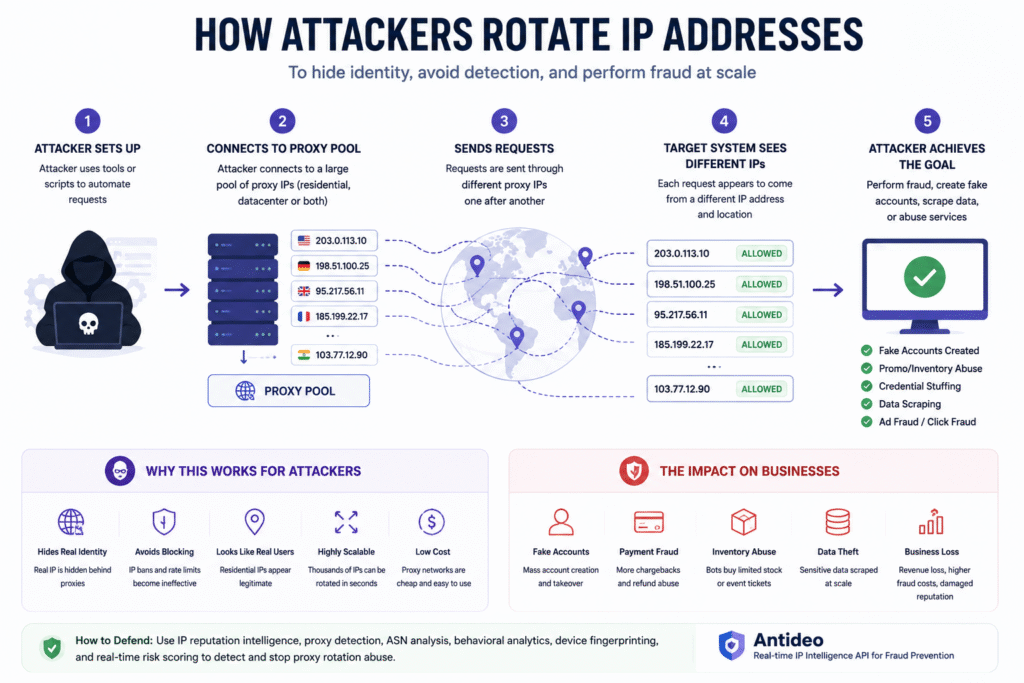
Residential proxy abuse has become a major concern across industries.
Affected sectors include:
- Ecommerce
- Banking
- Travel
- Gaming
- Social media
- Ticketing platforms
- Crypto exchanges
Some common fraud scenarios include:
| Common Fraud Scenarios | Description |
|---|---|
| Fake Account Creation | Attackers rotate residential IPs to create thousands of accounts without triggering detection systems. |
| Sneaker and Ticket Bots | Bots use residential IPs to bypass rate limits and purchase limited inventory. |
| Ad Fraud | Fraudsters simulate real users clicking ads through residential networks. |
| Credential Stuffing | Attackers test stolen passwords using rotating proxy networks to avoid bans. |
Best Practices for Preventing Proxy-Based Fraud
As a best practice Businesses should avoid relying on a single signal. Instead, use layered fraud prevention approaches.
Recommended Security Measures
| Fraud Prevention Security Measure | Description |
|---|---|
| Use IP Reputation APIs | Analyze risk signals in real time. |
| Detect Hosting Providers | Flag suspicious cloud infrastructure traffic. |
| Monitor Velocity | Detect rapid account creation or login attempts. |
| Combine Device Intelligence | Correlate IP behavior with browser and device fingerprints. |
| Use Risk Scoring | Avoid outright blocking users unless multiple signals indicate fraud. |
| Monitor Behavioral Anomalies | Look for automation patterns instead of relying only on IP data. |
Final Thoughts
Residential proxies and datacenter proxies are both heavily used in online fraud, but the landscape is shifting rapidly.
Datacenter proxies remain popular for large-scale automation because they are cheap and fast. However, residential proxies have become the preferred option for sophisticated fraud operations because they blend in with legitimate user traffic.
For businesses, this means traditional IP blacklists are no longer enough.
Modern fraud prevention requires:
- IP reputation intelligence
- Behavioral analysis
- Device fingerprinting
- Proxy detection
- Real-time risk scoring
As attackers continue to evolve, organizations need smarter ways to identify suspicious traffic without blocking legitimate users.
Platforms like Antideo help businesses detect:
- Proxy usage
- VPN traffic
- Hosting providers
- Tor nodes
- High-risk IP addresses
allowing fraud teams to make more accurate risk decisions in real time.
Frequently Asked Questions
Residential proxies themselves are not illegal. However, they can be abused for fraud, scraping, spam, and account automation.
Because the IP addresses belong to real ISP customers and appear similar to normal consumer traffic.
No. Many businesses use datacenter proxies for legitimate automation and testing purposes.
Yes. Modern IP intelligence systems can identify many VPN providers, hosting networks, and anonymization services.
Proxy networks allow attackers to scale fraud operations while hiding their identity and bypassing security controls.
Related Posts
How Fraudsters Use VPNs, Proxies, and Tor to Bypass Security
Cybercriminals have become significantly more sophisticated over the last decade. Traditional fraud prevention methods that once relied on IP blocking and simple rate limits are no longer enough. Today’s attackers use advanced anonymity tools like…

- Jul 08
- 5 mins read
Role of geolocation data in fraud prevention
In today’s interconnected world, where digital transactions and online activities have become the norm, fraudsters are constantly devising new ways to exploit vulnerabilities and deceive unsuspecting victims. As the battle against fraud intensifies, technology has…
- Nov 28
- 3 mins read